
In an era where businesses compete on speed, agility, and innovation, risk management often focuses on financial volatility, market shocks, or cyber threats. Yet, lurking beneath these headline risks is a category that quietly shapes organizational resilience: Operational Risk.
1. Introduction: Why Operational Risk Is the Silent Giant of Enterprise Risk
Unlike credit or market risk, operational risk isn’t about financial instruments or market trends—it’s about people, processes, systems, and external events. It’s the risk of loss resulting from failed operations, human error, fraud, technology breakdown, or unforeseen disruptions like natural disasters.
Operational risk doesn’t make headlines until it erupts—think of major system outages, compliance breaches, or control failures leading to multimillion-dollar penalties. These aren’t abstract scenarios; they are frequent, real-world incidents that cost organizations billions annually.
This article provides a consulting-grade perspective on operational risk: what it is, why it matters, how to manage it strategically, and how future trends will redefine its boundaries.
2. What Is Operational Risk? A Clear Definition
Operational risk is defined as the risk of loss resulting from inadequate or failed internal processes, people, and systems, or from external events. It includes legal risk but excludes strategic and reputational risk as standalone categories—though both are often consequences of operational failures.
In simple terms:
-
If a system outage stops your payments from processing, that’s operational risk.
-
If a trader breaches compliance rules, leading to fines, that’s operational risk.
-
If a flood shuts down your data center, that’s operational risk.
2.1 The Four Pillars of Operational Risk
Operational risk typically spans:
-
People Risk: Errors, fraud, misconduct, or skill gaps.
-
Process Risk: Inefficient, poorly documented, or outdated processes.
-
System Risk: IT failures, cyber incidents, integration breakdowns.
-
External Risk: Natural disasters, political unrest, supply chain disruptions.
3. Why Operational Risk Has Become a Strategic Priority
For decades, operational risk was considered a compliance checkbox. Today, it is recognized as one of the biggest threats to business continuity and financial stability. Why the shift?
3.1 Increasing Complexity
Globalization, digitalization, and interconnected ecosystems mean even small operational failures can have systemic effects.
3.2 Regulatory Pressure
Frameworks like Basel II and III have formalized operational risk as a capital requirement, forcing banks and financial institutions to measure and report it.
3.3 High-Impact Incidents
From massive data breaches to infrastructure collapses, the cost of operational failures is skyrocketing—not just financially, but in terms of reputation and customer trust.
3.4 Emerging Risks
Cybercrime, third-party dependencies, and climate-related disruptions have expanded the operational risk universe beyond traditional scenarios.
4. Components of Operational Risk: Breaking Down the Risk Universe
Operational risk isn’t monolithic. It comprises various risk types, often interdependent. Let’s explore the key categories:
4.1 Human Risk
People remain the weakest and strongest link in any organization. Risks include:
-
Human error in data entry or decision-making.
-
Internal fraud and collusion.
-
Lack of proper training leading to non-compliance.
4.2 Process Risk
When processes lack standardization or fail to keep pace with business changes, they create vulnerabilities. Examples:
-
Inefficient workflows that delay approvals.
-
Gaps in reconciliation processes.
-
Inconsistent documentation practices.
4.3 Technology and Systems Risk
Modern organizations depend on technology for almost everything. Risks include:
-
Core system outages disrupting operations.
-
Cyberattacks exploiting security flaws.
-
Failed technology integrations during mergers or upgrades.
4.4 External Risk
Events beyond an organization’s control can still devastate operations:
-
Natural disasters damaging physical assets.
-
Political unrest or sanctions affecting supply chains.
-
Pandemics forcing remote operations overnight.
4.5 Legal and Compliance Risk
Regulatory breaches can lead to heavy fines and reputational harm. Non-compliance often stems from:
-
Misinterpretation of evolving laws.
-
Delays in implementing new compliance measures.
5. Consulting-Grade Approach to Operational Risk Management
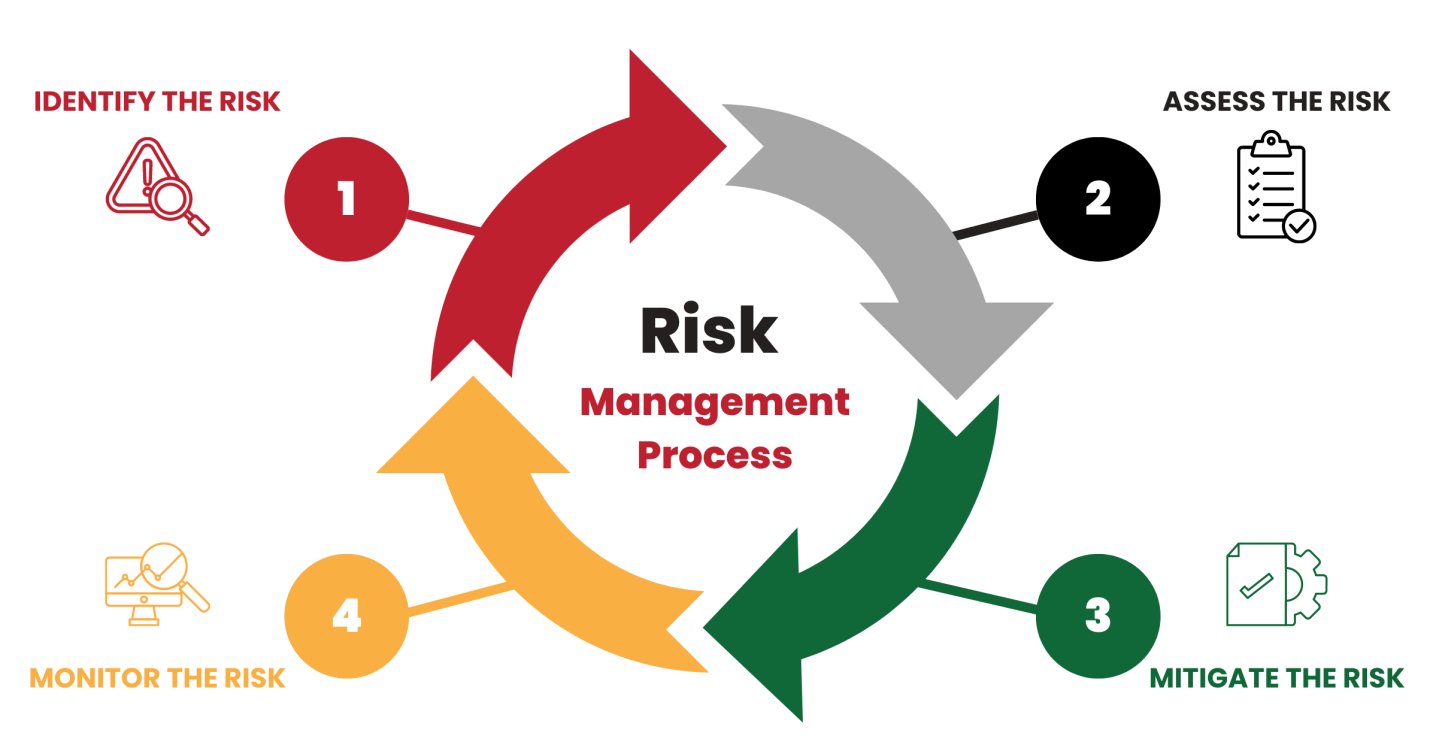
A strong operational risk framework isn’t just about minimizing losses; it’s about building resilience and agility. Here’s the consulting blueprint:
5.1 Establishing Governance and Culture
Operational risk management starts at the top:
-
Tone from the top: Senior leadership must emphasize the importance of operational risk.
-
Clear ownership: Define roles for risk identification, assessment, monitoring, and reporting.
-
Three Lines of Defense Model:
-
First Line: Business units owning risks.
-
Second Line: Risk management functions providing oversight.
-
Third Line: Internal audit ensuring independent assurance.
-
5.2 Risk Identification
Organizations must identify risks proactively through:
-
Process mapping: Visualizing key workflows to find failure points.
-
Scenario analysis: Anticipating high-impact events like cyberattacks or system outages.
-
Incident data analysis: Learning from past losses or near misses.
5.3 Risk Assessment and Measurement
Assessment involves quantifying risk exposure through:
-
Risk and Control Self-Assessments (RCSA): Business units evaluate their processes and controls.
-
Key Risk Indicators (KRIs): Metrics that signal potential issues (e.g., system downtime frequency).
-
Loss Data Analysis: Using historical data to predict future trends.
Measurement techniques include:
-
Qualitative assessments: Heat maps showing likelihood vs. impact.
-
Quantitative models: Advanced analytics estimating financial loss distributions.
5.4 Risk Mitigation Strategies
Common mitigation approaches include:
-
Strengthening internal controls: Automation, dual authorization, segregation of duties.
-
Process reengineering: Streamlining workflows for efficiency and resilience.
-
Training programs: Building awareness and accountability across the workforce.
-
Technology investment: Robust cybersecurity measures and system redundancies.
5.5 Monitoring and Reporting
Continuous monitoring ensures early detection of emerging risks:
-
Dashboards: Real-time visibility into risk indicators.
-
Exception reporting: Highlighting anomalies for quick action.
-
Board-level reporting: Providing aggregated risk views for strategic decisions.
5.6 Crisis Management and Business Continuity
Even the best controls cannot eliminate all operational risks. Organizations must have:
-
Incident response plans: Clear protocols for rapid containment and recovery.
-
Disaster recovery solutions: Backup systems and alternate sites.
-
Business continuity testing: Regular drills to validate readiness.
6. The Regulatory Dimension of Operational Risk
Operational risk is deeply embedded in regulatory frameworks:
-
Basel Accords: Require banks to allocate capital for operational risk, using standardized or advanced measurement approaches.
-
SOX (Sarbanes-Oxley): Emphasizes internal controls for financial reporting.
-
GDPR and Data Privacy Laws: Demand strong data handling processes to prevent breaches.
Regulators expect not just compliance but demonstrable evidence of effective risk management.
7. Common Pitfalls in Managing Operational Risk
Even mature organizations make mistakes. Here are frequent pitfalls:
-
Over-reliance on manual processes: Increases error rates and slows response times.
-
Siloed risk management: Lack of cross-functional collaboration leads to blind spots.
-
Reactive approach: Waiting for incidents instead of proactively identifying risks.
-
Inadequate third-party oversight: Vendors often introduce hidden risks.
-
Underestimating emerging threats: Particularly cyber risks and climate-related disruptions.
8. Leveraging Technology for Operational Risk Management
Technology isn’t just a source of operational risk—it’s a solution. Leading practices include:
-
Integrated Risk Management Platforms: Consolidate data, workflows, and reporting.
-
Automation and AI: Reduce human error and enhance predictive capabilities.
-
Data Analytics: Enable early detection of anomalies and trend analysis.
-
Blockchain: Improve transparency and integrity in transaction-heavy processes.
-
Cloud Solutions: Offer scalability and resilience, though they bring their own risks.
9. Emerging Trends in Operational Risk
The future of operational risk is being shaped by new realities:
9.1 Cybersecurity as a Dominant Theme
Cyber incidents are no longer IT issues—they’re enterprise risks with regulatory, financial, and reputational consequences.
9.2 Climate and ESG Risks
Climate change is disrupting supply chains, while ESG (Environmental, Social, Governance) compliance adds layers of operational complexity.
9.3 Third-Party and Outsourcing Risks
As organizations rely on vendors for critical operations, supply chain risk management is becoming a top priority.
9.4 Regulatory Expansion
New regulations around data privacy, sustainability, and AI will increase compliance pressures.
9.5 Advanced Analytics
AI and machine learning are enabling predictive risk modeling, transforming traditional approaches.
10. Real-World Examples and Lessons Learned
Case Example 1: Global Bank’s System Outage
A leading bank faced a major outage in its payment systems due to an untested software patch. The result: regulatory fines, reputational damage, and customer attrition.
Lesson: Strong change management and testing protocols are critical.
Case Example 2: Data Breach in a Healthcare Provider
A misconfigured server exposed sensitive patient data, leading to lawsuits and compliance penalties.
Lesson: Continuous monitoring and robust cybersecurity governance are non-negotiable.
11. The Consulting Playbook for Operational Risk Transformation
Consulting firms approach operational risk with a structured methodology:
-
Current State Assessment: Evaluate governance, processes, systems, and controls.
-
Gap Analysis: Benchmark against regulatory and industry standards.
-
Target Operating Model: Define roles, responsibilities, and processes for risk management.
-
Technology Enablement: Select and implement tools for automation and reporting.
-
Change Management: Embed a risk-aware culture across the organization.
-
Continuous Improvement: Establish monitoring and feedback loops.
12. Building a Resilient Operational Risk Framework: Best Practices
-
Embed Risk in Strategy: Make operational risk part of strategic planning, not just compliance.
-
Promote a Risk Culture: Train employees to own risks, not ignore them.
-
Invest in Data and Analytics: Use insights to anticipate risks rather than react.
-
Foster Collaboration: Break down silos between risk, compliance, IT, and business units.
-
Plan for the Unexpected: Test your crisis response and business continuity plans regularly.
13. Final Thoughts: Operational Risk as a Driver of Competitive Advantage
Operational risk isn’t just a threat—it’s an opportunity. Organizations that manage it effectively:
-
Enhance stakeholder trust.
-
Reduce the cost of disruptions.
-
Gain regulatory confidence.
-
Create operational resilience that supports growth and innovation.
In a world of uncertainty, operational risk management is not just a defensive play—it’s a strategic enabler of sustainable success.?